


Dietary inclusion of tannins to replace antibiotics in ruminants
 nutriNews international
Sobre este episodio
2 December 2022
 0
0
Dietary inclusion of antibiotics for growth promotion in farm animal production has be a common practice for several decades. Resulting in increased efficiency levels in animal production.
 Amongst these, vegetable tannins have drawn considerable attention and are probably some of the most studied compounds. This is especially true for ruminants.
Chemical structure and presence of tannins
Tannins are a heterogeneous group of phenolic compounds with diverse structures that share their abilities to bind and precipitate proteins.
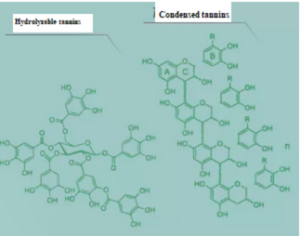
They are usually classified into 3 main groups:
Amongst these, vegetable tannins have drawn considerable attention and are probably some of the most studied compounds. This is especially true for ruminants.
Chemical structure and presence of tannins
Tannins are a heterogeneous group of phenolic compounds with diverse structures that share their abilities to bind and precipitate proteins.
They are usually classified into 3 main groups:
 The first 2 groups are found in terrestrial plants while PTs are found only in marine brown algae.
Tannins are widely distributed amongst the plant kingdom, being especially abundant in nutritionally important forages, shrubs, cereals and medicinal herbs (Salunkhe et al., 1982, Wang et al., 1999).
Tannins tend to be more abundant in the vulnerable parts of plants, e.g., new leaves and flowers (Terrill et al., 1992, Van Soest, 1982, Frutos et al. , 2004).
Chemical structures and tannin concentrations vary greatly between plant species, growth stages and growth conditions.
Biological activity of tannins
Tannins serve as part of the plant’s defense system against pathogen invasion and insect attacks. Thest possess numerous biological activities, such as:
The first 2 groups are found in terrestrial plants while PTs are found only in marine brown algae.
Tannins are widely distributed amongst the plant kingdom, being especially abundant in nutritionally important forages, shrubs, cereals and medicinal herbs (Salunkhe et al., 1982, Wang et al., 1999).
Tannins tend to be more abundant in the vulnerable parts of plants, e.g., new leaves and flowers (Terrill et al., 1992, Van Soest, 1982, Frutos et al. , 2004).
Chemical structures and tannin concentrations vary greatly between plant species, growth stages and growth conditions.
Biological activity of tannins
Tannins serve as part of the plant’s defense system against pathogen invasion and insect attacks. Thest possess numerous biological activities, such as:
- However, the use of antibiotic growth promoters has been widely associated with the promotion and/or selection of antibiotic-resistant microorganisms in farm animals (Chattopadhyay, 2014).
Amongst these, vegetable tannins have drawn considerable attention and are probably some of the most studied compounds. This is especially true for ruminants.
Chemical structure and presence of tannins
Tannins are a heterogeneous group of phenolic compounds with diverse structures that share their abilities to bind and precipitate proteins.
They are usually classified into 3 main groups:
- Hydrolyzable tannins (HT)
- Condensed tannins (CT) (also called proanthocyanidins)
- Phlorotannins (PT)
The first 2 groups are found in terrestrial plants while PTs are found only in marine brown algae.
Tannins are widely distributed amongst the plant kingdom, being especially abundant in nutritionally important forages, shrubs, cereals and medicinal herbs (Salunkhe et al., 1982, Wang et al., 1999).
Tannins tend to be more abundant in the vulnerable parts of plants, e.g., new leaves and flowers (Terrill et al., 1992, Van Soest, 1982, Frutos et al. , 2004).
Chemical structures and tannin concentrations vary greatly between plant species, growth stages and growth conditions.
Biological activity of tannins
Tannins serve as part of the plant’s defense system against pathogen invasion and insect attacks. Thest possess numerous biological activities, such as:
- Antimicrobial properties
- Antiparasitic properties
- Antioxidant capacity
- Antiviral properties
- The amount consumed by the animals
- Type and chemical structure
- The composition of the rest of the diet (especially the concentration of CP) (Mueller-Harvey, 2006)
Podcasts recomendados
IMPACT on POULTRY HEALTH EXPLAINED – NUTRINEWS ON AIR Dr. Edgar Oviedo
Understanding broiler breeder FERTILITY DECLINE – NUTRINEWS ON AIR Dr. Edgar Oviedo
Unlocking the POTENTIAL of BIOREACTOR-BASED INSECT PROTEIN – NUTRINSIGHTS Dr. Ari Riihimaa

PHOSPHORUS in SWINE NUTRITION: Expert insights – NUTRINEWS ON AIR Dr. Alberto Morillo

Strategies for GUT HEALTH and sustainable ANTIBIOTIC USE – NUTRINSIGHTS Dr. Marcos Rostagno

Monitoring LIVER HEALTH to boost HEN PRODUCTIVITY – NUTRINSIGHTS Dr. Reza Akbari

Key indicators for SOYBEAN MEAL QUALITY in POULTRY NUTRITION – NUTRINSIGHTS Dr. Nelson Ruiz
